Os muitos significados de "Get": um verbo, muitos usos!

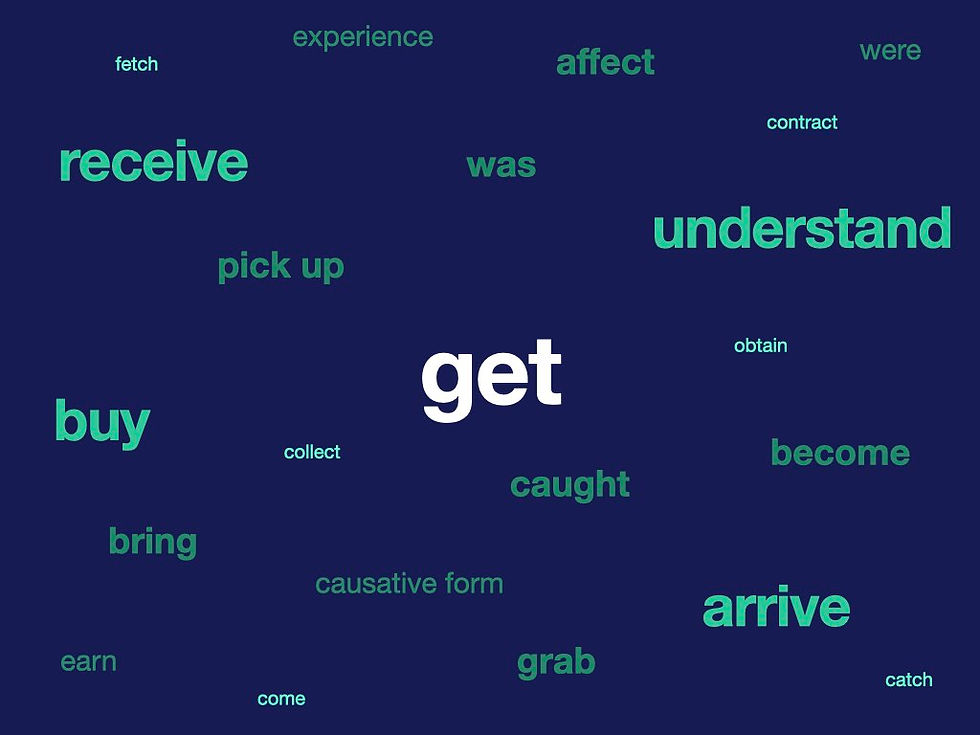
Alguns dos meus alunos de inglês têm notado algo estranho ultimamente: o verbo "get" está em todo lugar. Os falantes nativos de inglês, como eu, usam "get" em muitas frases, mas o que ele significa? Muda a cada vez? Quando não podemos usá-lo?
Às vezes "get" pode significar "chegar", às vezes "receber", às vezes "entender" e às vezes "ficar" (tornar-se). Outras vezes, "get" pode substituir por completo um verbo mais específico.
Na verdade, "get" é um dos verbos mais versáteis (que mudam de sentido com facilidade) e informais do inglês. Na fala casual, ele costuma substituir verbos mais específicos: às vezes fazemos isso para soar mais naturais, outras vezes apenas por hábito.
Vamos ver os principais usos de "get", o que eles realmente significam e quando é adequado usá-los. Não se esqueça de testar seus conhecimentos no minitestes lá embaixo!
Os muitos significados de "Get":
1. Get = Receber / Obter / Comprar (receive / obtain / buy)
Exemplos:
I got a package in the mail. → received
Did you get my message? → receive
Can you get some milk at the store? → buy
She got a new phone yesterday. → bought/received
2. Get = Chegar (arrive)
Exemplos:
What time did you get there? → arrive
We got home around 10 p.m. → arrived
Has the package gotten there yet? → arrived
Anúncio
3. Get = Ficar / Tornar-se (become) – mudança de estado
Exemplos:
It’s getting dark outside. → becoming
He got angry when he heard the news. → became
She got sick last week. → became ill/sick
4. Get = Entender (understand)
Exemplos:
Do you get what I mean? → understand
I don’t get this part of the lesson. → understand
I don't get it. → understand
5. Get = Trazer / Buscar / Pegar (bring / fetch / grab)
Exemplos:
Can you get my bag for me? → bring
I’ll get the door. → go open it
Go get your coat! → fetch, bring
Can you get the umbrella on your way out? → grab
Anúncio
6. Get = Mandar fazer / Fazer algo acontecer (have something done / cause something to happen)
Esta é a forma causativa (causative form). A forma causativa é quando uma pessoa faz com que outra realize uma ação por ela.
Exemplos:
I got my hair cut. → I had someone cut it for me
We got the car fixed yesterday. → We had someone repair the car for us
He got me to help him move. → He persuaded or made me help him move
7. Get = Pegar / Contrair (catch / contract) – para doenças
Exemplos:
He got a cold last week. → caught
I think I’m getting sick. → contracting; I'm not sick yet, but I feel like I will be soon
8. Get = Ser afetado por / Passar por (be affected by / experience)
Exemplos:
I got hit by the ball. → I was hit
We got stuck in traffic. → We were stuck
She got caught in the rain. → She was caught
Anúncio
Quando NÃO usar "Get"
❌ Em redações acadêmicas: She got sick → She became ill
❌ Em e-mails profissionais: I got your report → I received your report
❌ Em notícias: He got in trouble → He was reprimanded
❌ Em uma entrevista de emprego: I got a degree in finance → I obtained a degree in finance
Quanto mais sério ou profissional o tom precisar ser, menos você deve usar "get". Escolha um verbo mais específico sempre que precisar soar profissional. Muitas vezes é aceitável usar "get" em uma conversa falada no ambiente de trabalho, por exemplo, "I got the email you sent me," mas procuramos não usá-lo na escrita profissional.
Dica:
Lembre-se: no trabalho, geralmente é aceitável usar "get" ao falar, mas não ao escrever.
Minitestes
Escolha o melhor substituto para "get" nas frases a seguir:
He got a new watch last weekend.
a) became
b) received
c) arrived
d) brought
They got to the party late.
a) received
b) arrived
c) understood
d) bought
She got tired after the run.
a) became
b) arrived
c) caught
d) understood
Can you get that book for me?
a) understand
b) buy
c) grab
d) become
I didn’t get the joke.
a) arrive
b) buy
c) understand
d) become
Respostas
b) received
b) arrived
a) became
c) grab
c) understand
Anúncio
Considerações finais
"Get" é flexível (muda de sentido com facilidade) e está em todo lugar, mas não o use quando precisar ser específico ou soar profissional. Para quem está aprendendo, saber como "get" é usado em contextos casuais e formais deixa o seu inglês mais natural e mais preciso.
Será que deixei passar algum exemplo neste artigo? Ou talvez você tenha uma dúvida sobre uma frase específica que já viu? Deixe um comentário abaixo e podemos conversar sobre ela!
Este artigo foi escrito originalmente em inglês por Thomas. As traduções foram feitas por IA. Para ler o artigo original em inglês, altere o idioma do site para inglês.


