Adverbs of Frequency: Never, Always, and Everything in Between

Updated: Sep 30
If you've been learning English for a while, you might know that we have a lot of ways to talk about how often things happen. Do you always eat breakfast? Do you sometimes skip your daily exercise?
Let's talk about seven common adverbs of frequency: always, often, usually, sometimes, occasionally, rarely, and never. These little words do a lot in everyday conversation, and once you get the hang of them, you'll sound much more natural.
Adverbs of Frequency: Where Do They Go?
Before we dive into examples, here's the basic rule: most adverbs of frequency go before the main verb but after the verb "to be."
I always drink coffee in the morning. (before the main verb)
She is always on time. (after "is")
Got it? Let's look at each word.

Always (100% of the time)
This one is simple. If you always do something, you do it every single time.
I always check my email before class.
My students always ask good questions when they're confused.
Think about something you do in every situation, every day, etc. Maybe you always brush your teeth before bed. Maybe you always say "thank you" when someone holds the door for you. That's when you can use always.
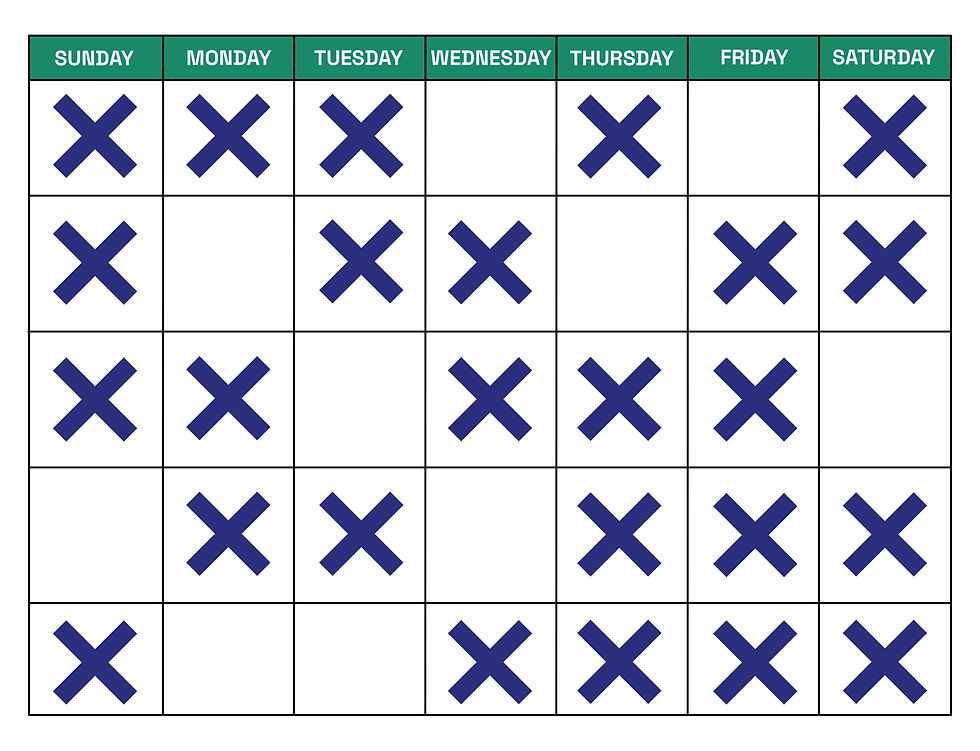
Usually (most of the time, but not every time)
Usually means something happens more often than not, but there are exceptions.
I usually take the subway to work, but sometimes I walk if the weather is nice.
We usually finish our lesson around 8 PM. (Maybe we finish later on days when there are a lot of questions.)
What do you usually do? Maybe you usually eat lunch at noon, but on busy days you eat later.
Advertisement

Often (a lot, but less definite than "usually")
Often is similar to "usually," but it feels a little less guaranteed. It just means something happens many times.
I often listen to podcasts during my commute.
My students often mix up "since" and "for."
Think about your habits. Do you often scroll through social media before you fall asleep? Do you often rewatch your favorite shows?

Sometimes (about half the time)
Sometimes is flexible. It means something happens, but not regularly. It can also go at the beginning of a sentence.
Sometimes I cook dinner, and sometimes I order takeout.
I sometimes forget to reply to texts. (To any of my friends reading this, sorry!)
What do you do sometimes? Maybe you sometimes go to the gym, but only when you're feeling energetic.

Occasionally (less than "sometimes")
Occasionally means every now and then, but not often. It has a slightly more formal feel than "sometimes."
I occasionally treat myself to a fancy coffee on the weekend.
We occasionally have surprise quizzes in class.
What do you do occasionally? Maybe you occasionally visit a museum or occasionally buy yourself an expensive dinner.
Advertisement

Rarely (almost never)
Rarely means something happens, but not very frequently. It's the opposite of "often."
I rarely watch TV nowadays. I prefer reading.
My students rarely miss class, which I really appreciate.
What do you rarely do? Maybe you rarely eat fast food, or you rarely stay up past midnight.

Never (0% of the time)
Never means it does not happen at all. Zero times.
I never drink coffee after 6 PM. If I did, I wouldn't sleep.
She never arrives late to class.
What do you never do? Maybe you never skip breakfast, or you never leave the house without your phone.
Putting Them All Together
Let's imagine a student named Maria and see how these adverbs describe her life:
Maria always goes to work Monday through Friday. (She never misses a day.)
She usually takes the bus, but she occasionally drives when it's raining.
She often eats lunch at her desk while she studies English vocabulary.
Sometimes she meets friends after work, and sometimes she goes straight home.
She rarely eats dinner after 9 PM.
She never skips her English practice.
See how each adverb gives us a different idea of how much something happens? Without them, we'd have to say "She goes to work every day" and "She takes the bus most days," which is more words than we really need. Adverbs of frequency make everything cleaner and easier.
Advertisement
Mini Quiz:
Fill in the blank with the best adverb of frequency: always, usually, often, sometimes, occasionally, rarely, or never.
I __ eat breakfast. I love starting my day with food.
She __ drinks soda. Maybe once or twice a month.
They __ go on vacation. About once every two years.
He __ forgets his keys. It happens a few times a week.
We __ watch horror movies. I'm too scared.
I __ study English in the evening, but not every night.
You __ arrive on time. You're very punctual.
Answers:
always
occasionally (or rarely)
rarely
often
never
usually (or sometimes)
always
Wrapping Up
How did you do on the quiz? Do you need a little more practice? Try writing a few sentences in the comments about your own routine using these adverbs. You can also find a matching game to practice matching the adverbs with their images over in the games lab! Try it out now! The more you practice, the more natural they'll feel.