I tanti significati di "Get": un verbo, mille usi!

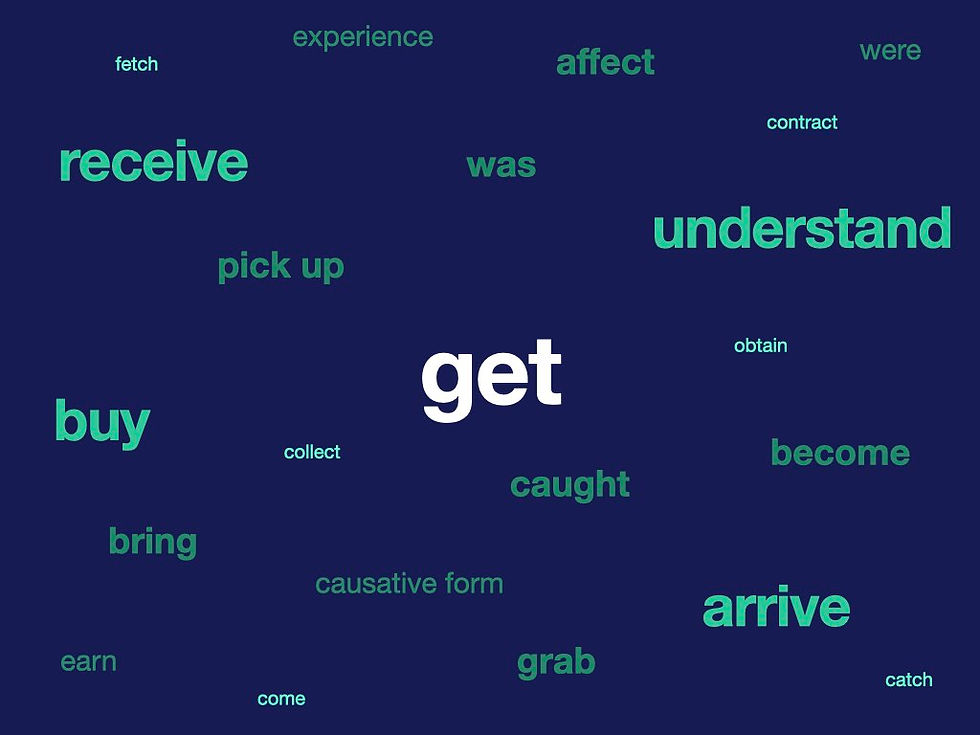
Alcuni dei miei studenti di inglese hanno notato una cosa strana ultimamente: il verbo "get" è dappertutto. I madrelingua inglesi, come me, usano "get" in molte frasi. Ma cosa significa? È diverso ogni volta? Quando è inappropriato usarlo?
A volte "get" può significare "arrive", "receive", "understand" e persino "become". Altre volte "get" può sostituire del tutto un verbo più specifico.
In effetti, "get" è uno dei verbi più versatili e informali dell'inglese. Nel parlato informale spesso sostituisce verbi più specifici. A volte lo facciamo per suonare più naturali, altre volte è solo una questione di abitudine.
Esploriamo i principali usi di "get", cosa significano e quando è accettabile usarli. Non dimenticare di mettere alla prova le tue conoscenze con il mini quiz qui sotto!
I tanti significati di "Get"
1. Get = Receive / Obtain / Buy (ricevere / ottenere / comprare)
Esempi:
I got a package in the mail. → received
Did you get my message? → receive
Can you get some milk at the store? → buy
She got a new phone yesterday. → bought/received
2. Get = Arrive (arrivare)
Esempi:
What time did you get there? → arrive
We got home around 10 p.m. → arrived
Has the package gotten there yet? → arrived
Pubblicità
3. Get = Become (diventare: cambiamento di stato)
Esempi:
It’s getting dark outside. → becoming
He got angry when he heard the news. → became
She got sick last week. → became ill/sick
4. Get = Understand (capire)
Esempi:
Do you get what I mean? → understand
I don’t get this part of the lesson. → understand
I don't get it. → understand
5. Get = Bring / Fetch / Grab (portare / andare a prendere / afferrare)
Esempi:
Can you get my bag for me? → bring
I’ll get the door. → go open it
Go get your coat! → fetch, bring
Can you get the umbrella on your way out? → grab
Pubblicità
6. Get = Have Something Done / Cause Something to Happen (far fare qualcosa / far accadere qualcosa)
Questa struttura è nota come forma causativa (causative form). Si verifica quando una persona fa compiere a un'altra persona un'azione per lei.
Esempi:
I got my hair cut. → I had someone cut it for me
We got the car fixed yesterday. → We had someone repair the car for us
He got me to help him move. → He persuaded or made me help him move
7. Get = Catch / Contract (For Illnesses) (prendere / contrarre: per le malattie)
Esempi:
He got a cold last week. → caught
I think I’m getting sick. → contracting; non sono ancora malato, ma sento che presto lo sarò.
8. Get = Be Affected By / Experience (subire / vivere un'esperienza)
Esempi:
I got hit by the ball. → I was hit
We got stuck in traffic. → We were stuck
She got caught in the rain. → She was caught
Pubblicità
Quando NON usare "Get"
Anche se "get" è informale e flessibile, ci sono situazioni in cui è meglio evitarlo.
❌ Nei saggi accademici: She got sick → She became ill
❌ Nelle email di lavoro: I got your report → I received your report
❌ Negli articoli di giornale: He got in trouble → He was reprimanded
❌ In un colloquio: I got a degree in finance → I obtained a degree in finance
Più il tuo tono deve essere serio o professionale, meno dovresti usare "get". Scegli un verbo più specifico ogni volta che devi risultare professionale. Spesso va bene usare "get" sul posto di lavoro durante una conversazione parlata, ad es. "I got the email you sent me," ma cerchiamo di non usarlo quando scriviamo sul posto di lavoro.
Parlato e scritto
Può andare bene usare "get" nelle conversazioni parlate sul lavoro, ad es. "I got the email you sent me," ma cerchiamo di evitarlo negli scritti professionali.
Consiglio:
Ricorda: usare "get" può andare bene quando parli al lavoro, ma in generale va evitato quando scrivi.
Mini quiz
Scegli il miglior sostituto di "get" nelle frasi seguenti:
He got a new watch last weekend.
a) became
b) received
c) arrived
d) brought
They got to the party late.
a) received
b) arrived
c) understood
d) bought
She got tired after the run.
a) became
b) arrived
c) caught
d) understood
Can you get that book for me?
a) understand
b) become
c) grab
d) arrive
I didn’t get the joke.
a) arrive
b) buy
c) understand
d) become
Risposte
b) received
b) arrived
a) became
c) grab
c) understand
Pubblicità
Considerazioni finali
"Get" è flessibile e si usa comunemente nel parlato informale. Tuttavia, evitalo quando devi essere preciso o suonare professionale. Per chi studia, sapere quando e come si usa "get" in contesti informali rispetto a quelli formali renderà il tuo inglese più naturale e preciso.
Ci sono esempi che ho dimenticato in questo articolo? O magari hai una domanda su una frase specifica che hai visto? Lascia un commento qui sotto e ne parliamo!
Questo articolo è stato originariamente scritto in inglese da Thomas. Le traduzioni sono fornite dall'IA. Per leggere l'articolo originale in inglese, cambia la lingua del sito in inglese.